Blog
When Off-the-Shelf Software Hits a Wall
Off-the-shelf software is built for the average user. That is its strength and its limit. Shopify, WordPress, and the plugins around them cover the common needs of thousands of businesses, which is exactly why the step that is specific to how you work usually is not in there. So you end up doing that step by hand, every time.
A custom build flips that. Because the software is built for you, the repeated chore that a platform makes you click through can become a single action. This post is about that difference, with a real example, and about when it is actually worth going custom instead of reaching for another plugin.
The short version
Off-the-shelf tools optimize for the many. A custom build optimizes for you. The value is not fancy features, it is removing the manual work that is specific to your business.
A real example: many steps became one
Publishing a post on my own site used to be a series of manual steps. Upload the text, upload each image one at a time, fix every image link by hand, set the title and search fields, publish, then check nothing broke. Tedious, and easy to get wrong.
So I built a small feature for it. Now I drop in a single file that contains the text and all the images, and the post is created or updated in one action. No platform sells that, because it is specific to how I work. It only exists because I build the software.
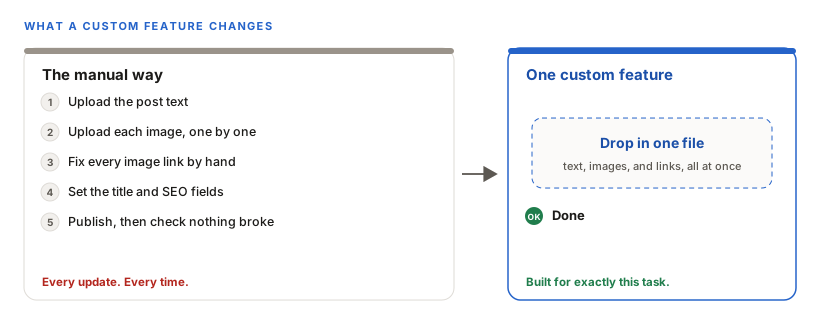
The point is not the import tool itself. It is that a task I repeated constantly turned into one button, because the software could be shaped around the task instead of the other way around.
Why off-the-shelf hits a wall
This is not a knock on SaaS or plugins. They are the right choice for the common case, and you should use them when they fit. The wall is specific: a platform is built for the average user, so your particular workflow is a manual workaround inside it. And the usual fix, another plugin, brings its own cost, bloat, and conflicts, and you still end up adapting to the tool.
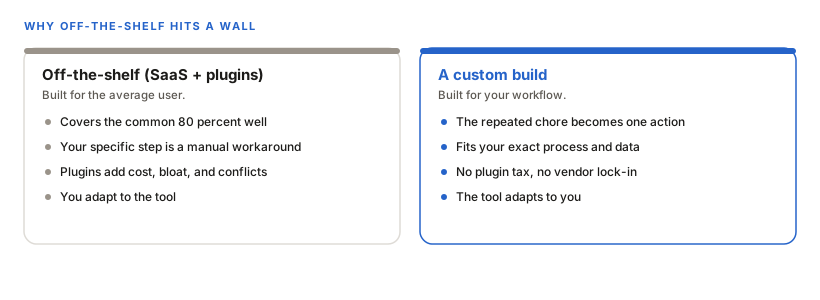
A custom build is the opposite trade. It costs more up front and it needs a developer, but the repeated work specific to your business gets designed away instead of clicked through forever.
When to just use a plugin
Custom is not the answer for everything, and pretending it is would be dishonest. If a plugin or a built-in feature already does the job well, use it. Building custom for something off-the-shelf already handles is wasted money and one more thing to maintain. Custom earns its keep when the task is specific to you, when no plugin really fits, or when the plugins that sort of fit have become a tax of their own.
Where this pays off
The import tool is a content example, but the shape is general. Any multi-step task you repeat on a schedule is a candidate to become one click.
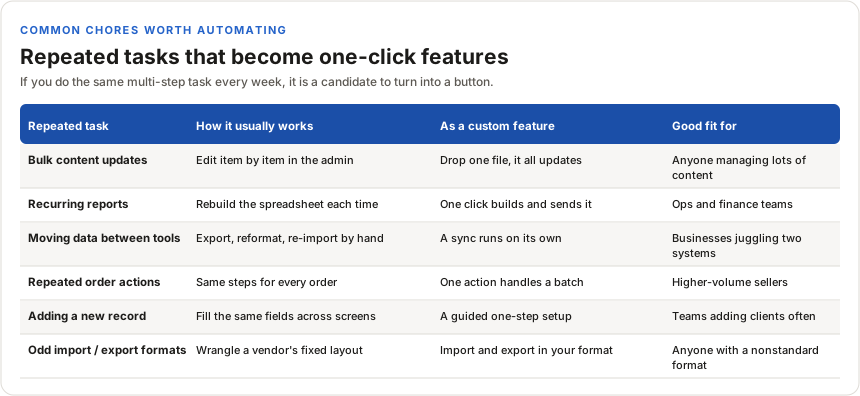
Every row is the same idea as the import tool. A task the business does the same way over and over, turned into a single action shaped around how they actually work.
Bottom line
Off-the-shelf software is the right starting point for most businesses, and often it is all you need. The moment worth noticing is when a task that is specific to how you work has quietly become a weekly chore that no setting fixes. That is where a custom feature pays for itself.